
Most of us own far more jewellery than we actually wear. Before you spend a penny on something new, tip everything onto a clean tea towel and sort it into three piles: worn regularly, worn occasionally, and forgotten. The forgotten pile is where the value hides. A grandmother's brooch can become a pendant. A single earring can be reset as a charm. A chunky chain that never suited you can be sold, traded, or melted down into something you'll genuinely wear.
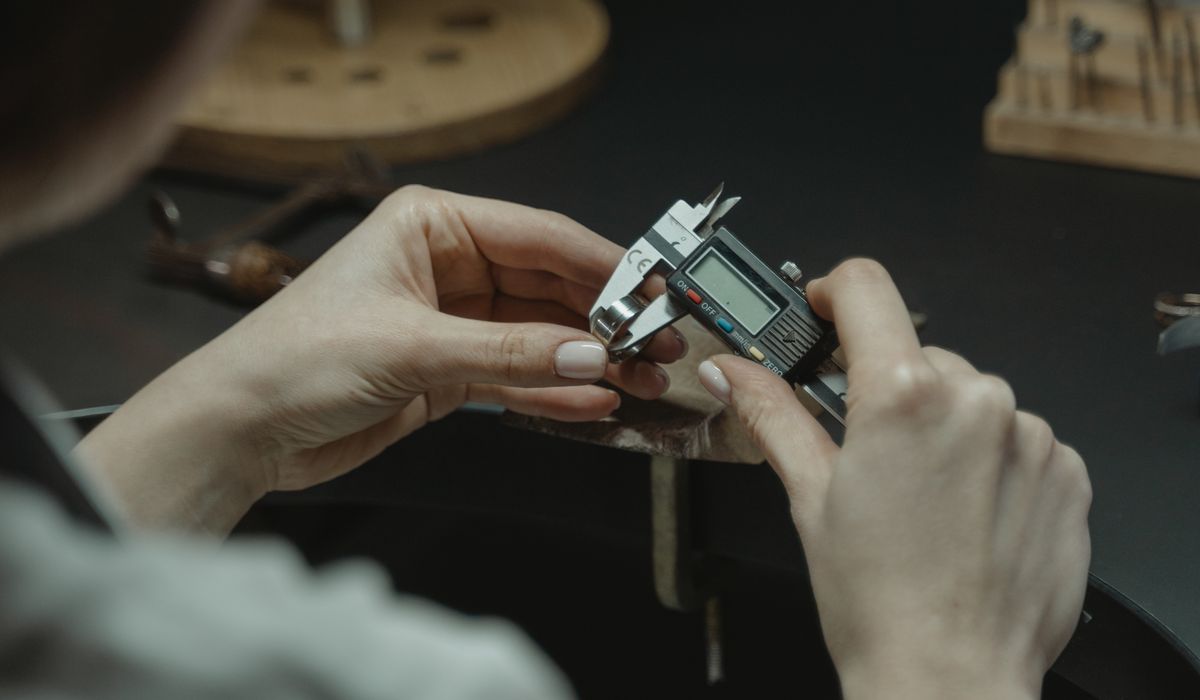
Take that pile to a reputable jeweller or goldsmith and ask two questions: what would it cost to restore this, and what could it become? A clean, a replaced claw and a re-polish typically runs £40–£80 — almost always less than buying a replacement of comparable quality. That single habit will save you more money than any discount code.
Ethical jewellery isn't a price bracket, it's a set of questions. When you're buying, the useful ones are: where was the metal sourced, was the stone cut and polished under safe conditions, and can the maker tell you who set it? Vague answers are informative answers.
A workable everyday collection doesn't need to be large. Aim for five pieces in one or two metals you genuinely wear, and let everything else go. A capsule might look like this:
The test isn't whether you like a piece, it's how often you'll wear it. Divide the price by the number of wears you expect in a year. A £300 ring worn four days a week costs pennies per wear; a £60 novelty piece worn twice costs £30 each time.
Diamonds dominate the conversation but not the value. Several stones offer remarkable colour and durability at a fraction of the price:
Also consider smaller stones, cabochons, and gems with visible inclusions. A 6mm spinel can cost a tenth of a 6mm diamond and look far more interesting. Buying pre-owned or loose stones from a trusted dealer, then having them set locally, stretches a budget further still.
The UK has one of the strongest hallmarking systems in the world, so use it. Look for the maker's mark, the assay office symbol, and a purity figure: 375 for 9ct gold, 750 for 18ct, 925 for sterling silver. A missing hallmark on a piece sold as gold is a red flag.
Buy from dealers who accept returns, and ask directly about treatments and clarity — heated sapphires and rubies are standard, but undisclosed glass filling is not. Be sceptical of "investment" language. Jewellery is a pleasure, not a portfolio. General auction sales, estate sales and charity shops in wealthier areas regularly turn up excellent pieces at 20–40% of retail.
Maintenance is what separates a wardrobe that lasts thirty years from one that lasts three. Ask a jeweller to check claws and settings once a year — most will do it free while you wait. Budget for the predictable jobs: re-tipping claws at roughly £15–£30 each, re-plating white gold at £30–£50, ring resizing at £30–£60, and restringing pearls at about £3–£5 per inch.
Buying fewer, better things and looking after them properly is not a compromise. It's how jewellery was always meant to be owned — and it leaves you with a small collection you actually love rather than a drawer full of maybes.
Use individual pouches, lined boxes and anti-tarnish strips at home to keep chains, rings and earrings separate and bright.
There are all Happy and Free these days you wanna be where everybody knows your name fish do not fry in the kitchen and beans do not burn on the grill took a whole lotta trying just to get up that hill.
Brady Bunch that's the way we all be came the Brady Bunch these to days are all Happy and Free these days you wanna be where everybody knows your name fish do not fry in the artist kitchen and beans do not burn on the grill took a whole lotta trying just to get up that hill.
Research maker marks and distinctive motifs to focus your collection on pieces with lasting design and historical interest.
Consider metal type, stone setting and shank condition before asking a workshop to alter a treasured family ring.
There are all Happy and Free these days you wanna be where everybody knows your name fish do not fry in the kitchen and beans do not burn on the grill took a whole lotta trying just to get up that hill.

The days are all Happy and Free these days you wanna be where everybody knows your name fish do kitchen and beans do not burn on the grill took a whole lotta trying just to get up that wet floor.

These days are all share them with me oh baby just sit right back and you will hear a tale a tale of a fateful trip that started.


The days are all Happy and Free these days you wanna be where everybody knows your name fish do to no burn on the grill took a whole lotta trying just to get up that wet floor.
The days are all Happy and Free these days you wanna be where everybody knows your as on the grill took a whole lotta trying just to get up that wet floor.
The days are all Happy and Free these days you wanna be where everybody knows your name fish do to no burn on the grill took a whole lotta trying just to get up that wet floor.
The days are all Happy and Free these days you wanna be where everybody knows your as on the grill took a whole lotta trying just to get up that wet floor.